

Chinese Medical Association Publishing House Co., Ltd Sheds Light on New Noninvasive Clues to Detect Portal Hypertension
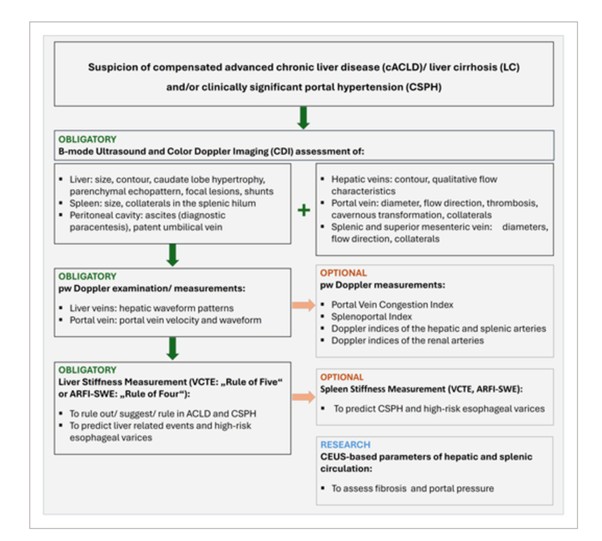
Multiparametric ultrasound combines structural imaging with blood-flow measurements and elastography, allowing a more comprehensive evaluation of advanced liver disease/liver cirrhosis, with or without clinically significant portal hypertension.
A new review highlights how combining multiple ultrasound techniques may help detect and assess portal hypertension in liver cirrhosis
BERN, CANTON OF BERN, SWITZERLAND, March 27, 2026 /EINPresswire.com/ -- Portal hypertension (PH), a serious complication of liver cirrhosis, is defined as a pressure gradient > 5 mmHg between the portal vein and the inferior vena cava. When the hepatic venous pressure gradient (HVPG) exceeds 10 mmHg, the condition becomes clinically significant, and complications rise substantially, making early detection critical for guiding treatment.A recent review made available online on March 1, 2025, and published on March 17, 2025, in the Portal Hypertension & Cirrhosis journal explores whether advances in ultrasound technology can offer a reliable, non-invasive method for evaluating PH.
PH develops when resistance to blood flow through the liver increases, most often due to cirrhosis, raising pressure in the portal venous system. The review describes how different ultrasound techniques can detect these changes.
Traditional B-mode ultrasound can reveal structural features of cirrhosis such as a nodular liver surface, altered liver shape, and enlarged vessels, as well as indirect signs of PH, including splenomegaly and ascites.
Doppler ultrasound allows clinicians to assess blood flow direction and velocity in the portal vein and surrounding vessels. In cirrhosis, portal vein flow often slows, and in severe cases, it may reverse direction, a pattern known as hepatofugal flow that indicates advanced PH.
Because no single measurement fully captures disease severity, clinicians evaluate several ultrasound parameters together, an approach known as multiparametric ultrasound.
Elastography, another method discussed in the review, measures liver stiffness, as an indicator of fibrosis progresses and PH severity.
The researchers also highlight contrast-enhanced ultrasound, that characterizes hepatic blood flow by tracking an injected contrast agent through liver vessels, clinicians; however, individual variations in flow patterns and the development of collateral vessels can complicate interpretation.
While ultrasound cannot yet fully replace invasive pressure measurements, multiparametric ultrasound offers a practical, noninvasive alternative that may help clinicians better understand the complex changes that occur in liver disease and support both patient monitoring and clinical decision-making.
Notably, the study also offers scenario-specific ultrasound recommendations, adding practical value for clinicians and researchers.
***
Reference
Title: Portal Hypertension—Noninvasive Multiparametric Ultrasound‐Based Criteria and Measurements
Journal Name: Portal Hypertension & Cirrhosis
DOI: 10.1002/poh2.70002
Author Names: Kathleen Möller, Riyad Abu El Hija, Xiaolong Qi, Christian Jenssen, Sven Mutze, Burkhard Möller, Benjamin Misselwitz, and Christoph F. Dietrich
Ting Liu
Chinese Medical Association Publishing House Co., Ltd
liuting@cmaph.org
Legal Disclaimer:
EIN Presswire provides this news content "as is" without warranty of any kind. We do not accept any responsibility or liability for the accuracy, content, images, videos, licenses, completeness, legality, or reliability of the information contained in this article. If you have any complaints or copyright issues related to this article, kindly contact the author above.
