

Your science and technology news reporter
Provided by AGP
2D thermo-optic modulation enabled by Ag2Te QD film based micro-ring resonator
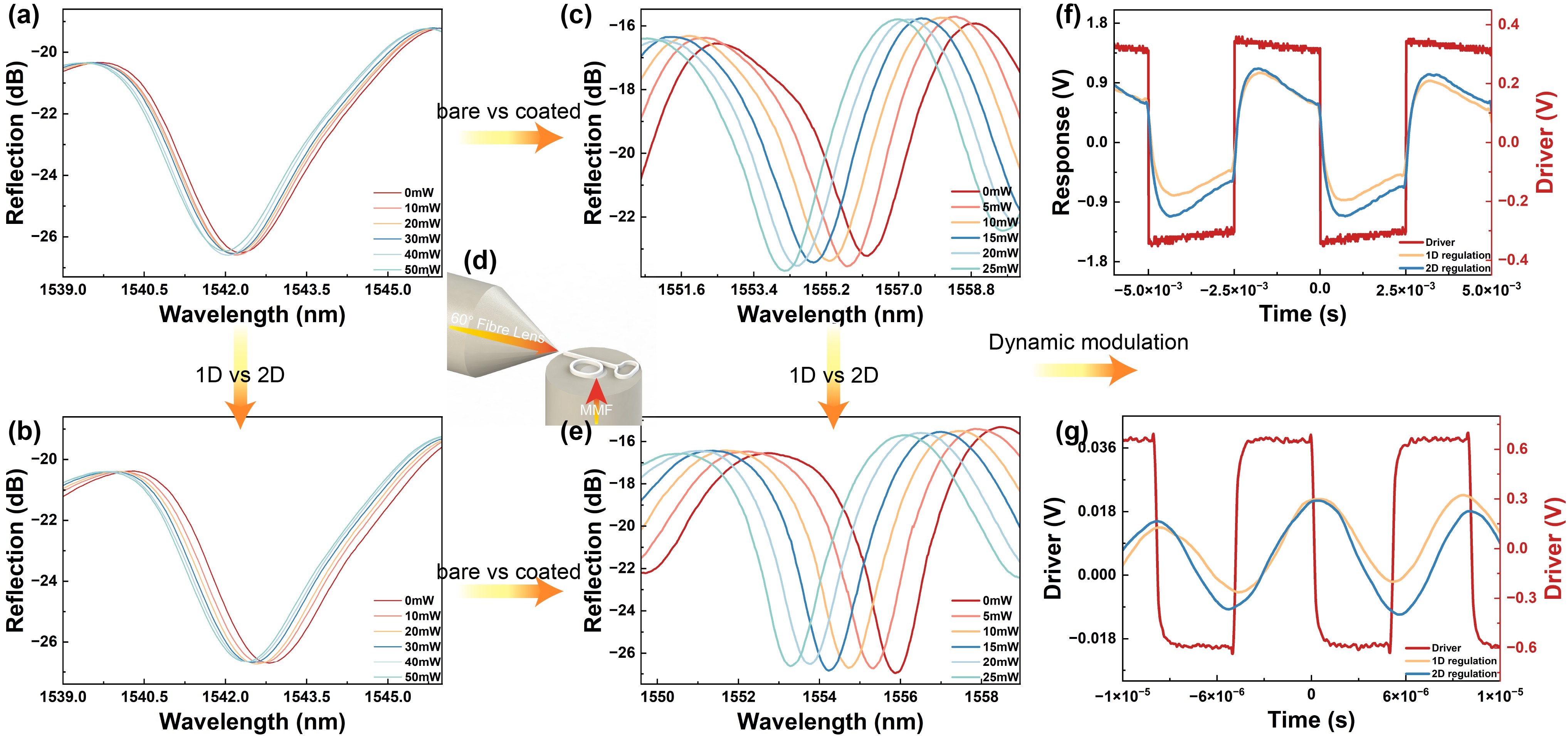
a, Reflection spectra under x-axis (1D) pumping for the uncoated MRR. b, Reflection spectra under x-axis and y-axis (2D) pumping for the uncoated MRR. c, Reflection spectra under x-axis (1D) pumping for the coated MRR. d, Schematic of the experimental set
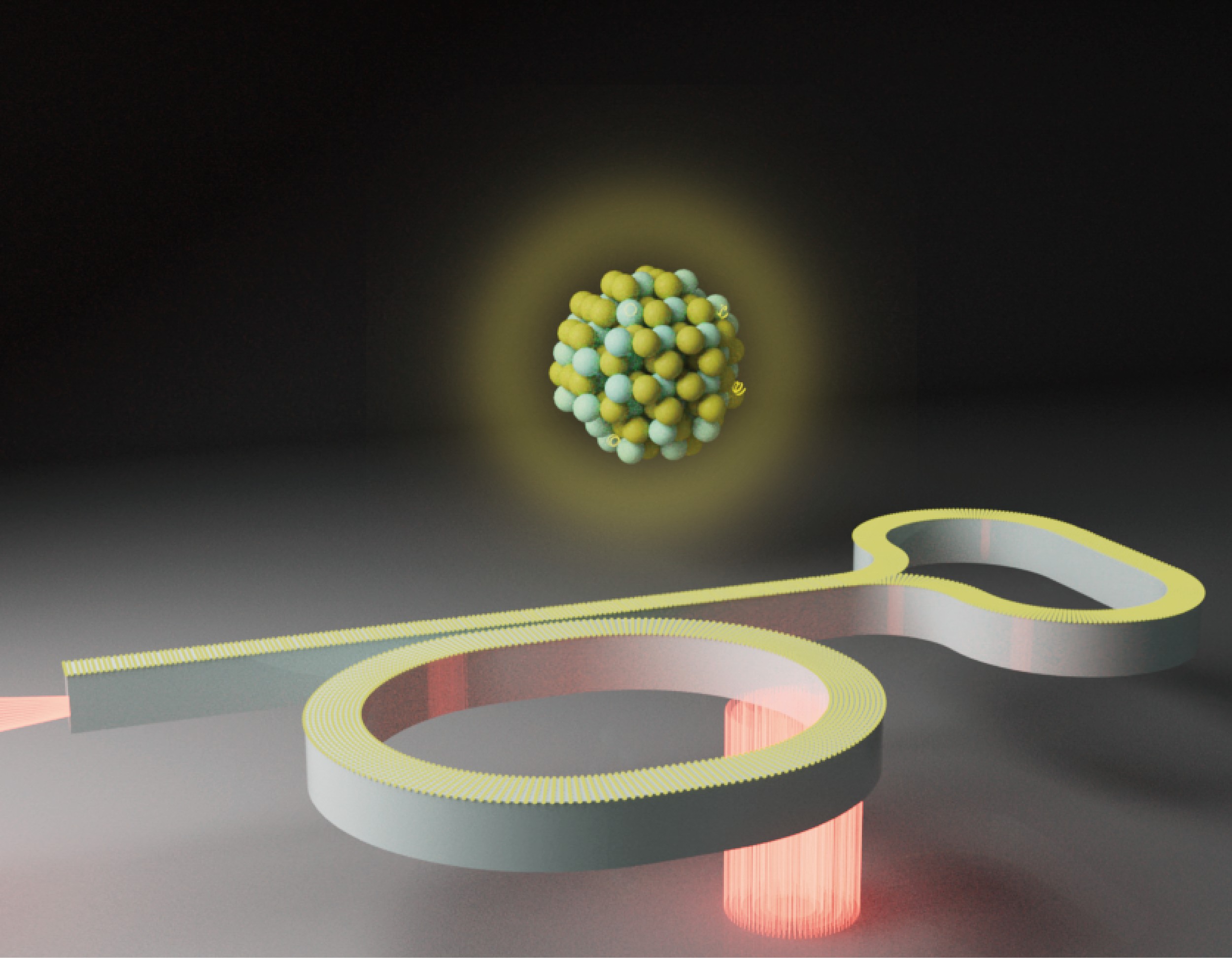
Schematic of the Ag2Te QD-coated polymer MRR with 2D thermo-optic modulation.
GA, UNITED STATES, May 14, 2026 /EINPresswire.com/ -- As the demand for high-speed, energy-efficient optical devices continues to rise, traditional thermo-optic (TO) modulation techniques face significant challenges. To address these, scientists in China have introduced an innovative hybrid photonic platform that enables two-dimensional (2D) TO modulation. By coating the platform with Ag₂Te quantum dots (QDs), the modulation efficiency, sensitivity, and speed are significantly enhanced. This combined approach not only improves energy efficiency but also paves the way for advanced applications in integrated photonics and optical communication, providing a powerful solution for future high-performance photonic systems.
As the demand for high-speed, energy-efficient systems continues to rise, significant attention has been placed on TO modulation as a promising approach for the dynamic reconfiguration of optical devices. Although conventional TO devices are effective, they face limitations such as slow response time and low modulation efficiency, which hinder their potential in high-speed applications. These challenges have led to the exploration of advanced techniques that can overcome these limitations and push the boundaries of TO modulation.
In a new paper published in Light: Advanced Manufacturing, a team of scientists, led by Professor Bo Dong from Shenzhen Technology University, China, and Professor Changyuan Yu from Hong Kong Polytechnic University, China, introduced an innovative approach to overcoming these limitations. The team developed a 2D TO modulation platform, integrating a QDs film based micro-ring resonators (MRRs) on the fibre end surface. This hybrid system not only improves modulation speed but also enhances sensitivity, achieving a remarkable 19.77-fold increase in tuning sensitivity and a 50-fold improvement in modulation speed compared to conventional polymer-based MRRs. The scientists summarize the operational principle of their platform:
“We have designed a novel 2D all-optical modulation strategy, utilizing two-photon micro-printing technique to fabricate a hybrid MRR structure on the fibre end surface. The 2D TO is achieved by one modulation light propagating along the MRR waveguide and the other illuminating vertically to the MRR along the fibre. By coating QDs film on the platform, the localized light field effect at the waveguide-layer interface is significantly enhanced. These results in a considerable boost in the TO effect, enabling real-time, high-speed reconfiguration of the optical device with enhanced performance and reduced energy consumption.”
“This approach enables significant improvements in dynamic modulation performance, achieving a modulation speed of up to 100 kHz, while simultaneously reducing energy consumption by 42% in 2D modulation with QD coating compared to one-dimensional modulation. Additionally, the tuning sensitivity was increased by 19.77 times over conventional platforms, demonstrating the enhanced static performance of the system,” they added.
“The presented technique not only enhances the performance of TO modulation but also offers significant improvements in energy efficiency and device scalability. This breakthrough could enable the development of more efficient, high-speed optical devices for applications in integrated photonic circuits and optical communication systems, all while reducing energy consumption,” the scientists concluded.
References
DOI
10.37188/lam.2026.046
Original Source URL
https://doi.org/10.37188/lam.2026.046
Funding Information
This research was funded by “Guangdong Basic and Applied Basic Research Foundation(Grant No.2026A1515011145)”, Shenzhen Science and Technology Program (Grant No. SGCX20250526142407010), and Shenzhen Key Industry R&D Program (Grant No. ZDCY20250901095708006).2D
Lucy Wang
BioDesign Research
email us here
Legal Disclaimer:
EIN Presswire provides this news content "as is" without warranty of any kind. We do not accept any responsibility or liability for the accuracy, content, images, videos, licenses, completeness, legality, or reliability of the information contained in this article. If you have any complaints or copyright issues related to this article, kindly contact the author above.
